Source Mini Excavator with Grab Shovel Bucket for Mining, Construction, and Landscaping
Find and compare 30 mini excavator with grab shovel bucket options from verified Chinese manufacturers. Evaluate key specifications such as engine power, bucket capacity, and hydraulic transmission to select the right machine for your project requirements.
Key considerations
Products List




Comprehensive Sourcing Guide
Mini Excavator with Grab Shovel Bucket Sourcing Guide
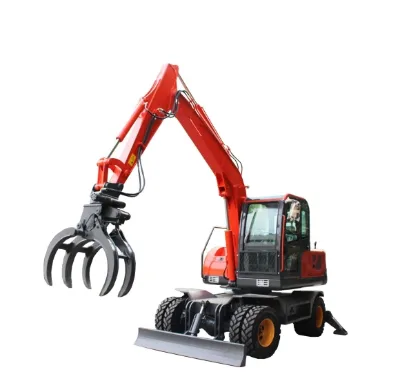
The procurement of a mini excavator equipped with a grab shovel bucket requires a precise understanding of the equipment's dual functionality for material handling and excavation. Based on observed market listings, these units are frequently categorized as crawler excavators designed for compact operations, often featuring hydraulic transmission systems that allow for versatile movement and attachment control. The specific configuration of a grab shovel bucket distinguishes these machines from standard digging models, making them ideal for applications involving loose materials, debris, or mining tasks where a shovel attachment is insufficient. Buyers must recognize that while the core machine is an excavator, the inclusion of a grab shovel bucket significantly alters the operational scope, necessitating a verification of the hydraulic flow and pressure ratings to ensure the attachment operates efficiently without compromising the machine's stability.
When evaluating the product scope, it is essential to distinguish between the various models available, as the observed data indicates a range of specifications from small-scale units to larger configurations. Some listings highlight models with specific engine types, such as single-cylinder, four-stroke, air-cooled vertical engines, which are common in compact machinery designed for cost-effective operation in confined spaces. The presence of different bucket capacities, ranging from 0.5 to 1.0 cubic meters, suggests that the "grab shovel" designation may apply to different attachment sizes depending on the specific model's hydraulic capacity. Procurement teams should not assume that all listed mini excavators with grab shovel buckets share identical dimensions or power outputs; instead, they must cross-reference the specific model number, such as HT-12 or ME08, against their project requirements to ensure the machine's overall dimensions and track width align with the intended work site constraints.
Product Scope and Observed Listing Signals
The market for mini excavators with grab shovel buckets presents a diverse array of product signals that buyers must interpret carefully to avoid specification mismatches. Observed listings reveal that these machines often originate from specific manufacturing hubs in China, such as Jining in Shandong Province, and are frequently packaged in wooden crates or iron frames to protect the hydraulic systems and tracks during transit. The variation in product standards, ranging from specific dimensional requirements like 1950 × 650 × 1820mm to general classifications like "Small Loader" or "Mining Excavator," indicates that the terminology used in listings can be inconsistent. Buyers should treat these labels as descriptive observations rather than definitive technical classifications, verifying the actual physical dimensions and intended usage against their own site conditions before proceeding with an order.
A critical signal in the product scope is the variability in engine specifications and power ratings, which directly impacts the machine's ability to handle the grab shovel attachment effectively. Data points show engines with rated powers ranging from 7.6 kW to 18.8 kW, with corresponding horsepower figures that dictate the machine's lifting and digging capabilities. The fuel consumption rates, observed at approximately 275 g/kWh, and fuel tank capacities, typically around 5.5 liters, provide insight into the operational efficiency and runtime of these units. Procurement decisions should be grounded in these specific performance metrics rather than general marketing claims, ensuring that the selected mini excavator can sustain the required work cycles without frequent refueling or power limitations that could hinder the efficiency of the grab shovel operation.
Technical Specifications to Verify
Verifying the technical specifications of a mini excavator with a grab shovel bucket is paramount to ensuring the machine meets the operational demands of the intended application. Buyers must prioritize the confirmation of the track width and ground contact length, as these dimensions determine the machine's stability and ability to navigate uneven terrain. Observed data indicates track widths ranging from 150mm to 180mm and ground contact lengths up to 1140mm, which are critical factors for preventing tipping when the grab shovel is fully extended or loaded. Additionally, the maximum digging depth and height, which can vary from 1300mm to 2560mm depending on the model, must be aligned with the specific excavation or material handling depths required by the project to avoid purchasing an underpowered unit.
The hydraulic system and engine compatibility are other technical areas that require rigorous verification to ensure the grab shovel bucket functions correctly. The transmission type is consistently noted as hydraulic, but the specific flow rates and pressure ratings must be confirmed to support the grab mechanism's opening and closing cycles. Engine displacement, observed at 0.499 liters for certain models, and the rated power output must be sufficient to drive both the undercarriage and the hydraulic attachments simultaneously. Buyers should also check the gradeability, which is listed as 30 degrees or 46% in different contexts, to ensure the machine can operate safely on the slopes typical of mining or construction sites where grab shovel buckets are frequently utilized.
Compliance and Safety Documentation
Compliance and safety documentation for mini excavators with grab shovel buckets must be scrutinized to ensure the equipment meets international safety standards and regulatory requirements. The most frequently observed certifications in the market data include CE and ISO9001, which indicate that the manufacturer has adhered to specific quality management and safety protocols. However, buyers should not assume that every listed unit automatically possesses these certifications; instead, they must request valid, up-to-date certification documents for the specific model being purchased. The presence of a CE mark is particularly important for European markets, while ISO9001 certification serves as a general indicator of the manufacturer's commitment to quality control processes.
Safety documentation should also include detailed operational manuals that cover the specific handling of the grab shovel bucket attachment. Since the grab shovel introduces additional mechanical complexity compared to a standard digging bucket, the manual must provide clear instructions on hydraulic operation, load limits, and emergency shutdown procedures. Buyers should verify that the documentation includes information on the machine's maximum digging height and depth, as well as the fuel tank capacity and fuel type, to ensure safe and efficient operation. The absence of comprehensive safety manuals or unclear instructions on the use of the grab shovel attachment should be treated as a red flag, indicating potential risks in the machine's design or the manufacturer's lack of adherence to safety standards.
Cost Drivers and Commercial Terms
The cost of a mini excavator with a grab shovel bucket is influenced by several key drivers, including the engine power, bucket capacity, and the complexity of the hydraulic system. Observed price ranges in the market span from 60 USD to 36,900 USD, reflecting the vast difference between basic, small-scale units and more robust, larger-scale models with advanced features. The inclusion of a grab shovel bucket as a customization option can also impact the final price, as specialized attachments often require additional engineering and manufacturing costs. Buyers should be aware that the lowest price points may correspond to units with minimal features or older models, while higher prices typically reflect newer technology, higher power ratings, and more durable construction materials.
Commercial terms, such as the minimum order quantity (MOQ) and packaging requirements, play a significant role in the total cost of ownership and logistics planning. The observed MOQ range of 1 to 5 units suggests that buyers can often procure single units, which is beneficial for small projects or testing purposes. However, the packaging method, whether carton packing, wooden crates, or iron frames, can affect shipping costs and the risk of damage during transit. Buyers should negotiate clear terms regarding the packaging to ensure the machine arrives in optimal condition, and they should also clarify the lead times and delivery schedules to avoid project delays. Understanding these commercial variables is essential for accurate budgeting and effective supply chain management.
Supplier Qualification and Quality Control
Supplier qualification for mini excavators with grab shovel buckets requires a thorough assessment of the manufacturer's production capabilities and quality control processes. The observed data indicates that many suppliers are located in specific industrial regions, such as Jining, Shandong Province, which are known for their concentration of heavy machinery manufacturers. Buyers should verify the supplier's production history, specifically their experience with hydraulic transmission systems and the integration of grab shovel attachments. The presence of certifications like CE and ISO9001 is a positive indicator, but it should be complemented by a review of the supplier's track record in delivering reliable equipment and providing after-sales support.
Quality control measures should be a central part of the supplier evaluation process, focusing on the durability of the machine's components and the precision of the hydraulic systems. Buyers should request evidence of factory testing, including performance tests for the engine, hydraulic flow, and structural integrity of the tracks and boom. The observation of specific model numbers like HT-12 and ME06 suggests that suppliers may have established production lines for these models, but buyers must ensure that the specific unit they are purchasing has undergone rigorous quality checks. Engaging in a pre-shipment inspection or requesting third-party quality assurance reports can provide additional assurance that the mini excavator meets the required standards before it leaves the factory.
Long-Term Procurement Checks
Long-term procurement checks for mini excavators with grab shovel buckets involve establishing a framework for ongoing performance monitoring and maintenance planning. Buyers should develop a maintenance schedule that accounts for the specific wear patterns associated with the grab shovel attachment, such as the hydraulic cylinders and bucket teeth. The observed fuel consumption rates and engine specifications provide a baseline for estimating operational costs over the machine's lifespan, allowing buyers to budget for fuel, oil changes, and potential part replacements. Regular inspections of the track width and ground contact length are also necessary to ensure the machine maintains its stability and performance over time.
Sustainability and parts availability are critical considerations for long-term procurement, as the availability of replacement parts can significantly impact the machine's uptime. Buyers should verify that the supplier offers a comprehensive parts catalog and has a reliable supply chain for critical components like the engine, hydraulic pumps, and grab shovel mechanisms. The observation of customization availability suggests that suppliers may be able to provide tailored solutions for specific long-term needs, but buyers should confirm the lead times for custom parts to avoid operational disruptions. Establishing a strong relationship with the supplier for ongoing support and parts supply is essential for maximizing the return on investment and ensuring the mini excavator remains a productive asset for years to come.
FAQs
What is the bucket capacity range for these mini excavators?
The bucket capacity ranges from 0.5 to 1.0 cubic meters. This specification supports efficient digging and loading operations for various material types. The design accommodates both shovel and grab shovel configurations to suit different application needs.
Can I request customization for the excavator specifications?
Customization is available for these units. Buyers can tailor specific attributes to match their operational requirements. This flexibility ensures the equipment aligns with particular site conditions or project demands without compromising core functionality.
What certifications do these excavators hold?
These excavators hold CE and ISO9001 certifications. These standards verify compliance with quality management and safety regulations. The units are supplied in new condition, ensuring reliability and adherence to established manufacturing protocols for international markets.
How is the power system configured in these models?
The power system uses a single-cylinder, four-stroke, air-cooled vertical engine. It delivers a rated power of 7.6 kW at 3000 rpm. This configuration provides efficient performance for small-scale excavation tasks while maintaining fuel economy.
What are the overall dimensions of the standard model?
The overall dimensions are 2430 by 720 by 1390 mm. This compact size allows for maneuverability in tight spaces. The track width is 150 mm, providing stability on various terrains during operation.
What is the maximum digging depth achievable?
The maximum digging depth is 1300 mm. This depth is suitable for light excavation and trenching tasks. The design prioritizes precision and control for detailed work in confined areas.
How is the product packed for shipping?
The product is packed in carton packing or wooden crates. This packaging ensures safe transport and protection during transit. The method varies by model to accommodate different sizes and structural requirements of the excavator units.